Stories, like anything else in life, move to invisible rhythms and are born at a pace best suited to them. In our determination for achievement and love of deadlines, the blank page too often becomes something we try to subject to our will. But the blank page does not need to be seen as foe to be conquered; rather as a friend to be invited inside.
The creation of a story is an interesting concept in itself:
The first idea sparks, the first light emerges. A series of ideas and thoughts becomes notes in the margins, and those notes grow and stretch out in filaments that weave a web of events and characters and feelings; out from the primordial empty chaos of the mind, order is forged. The light of words is separated from the darkness of simmering potential, and the grand unifying force rises as the sun that orders the rest of the story around it.
Trees grow, and plots branch, and flowers of character detail bloom. The ecosystem gains life and begins to run its own cycle, surprising even the writer who ventures into the new range of mountains and finds a lost city of gold.
But sometimes, the landscape feels barren and void. Despite your best efforts, the sun only torches the incipient grass, and the side river overflows to flood the plain. Creating a story, like a piece of music, has it’s own rhythm: the swells and crests of melody, the tense, breathless pauses; the galvanising crescendo to the climax, then a slow and steady fade to the end.
All stories are different and require a different rhythm of creation.
All writers are also different, and go through the journey differently.
In the world of professional authors and their publishing deadlines – an unavoidable reality – the natural flow of creation suffers. What artificial light and clocks did to our circadian rhythms and work-life balance, publishing schedules and publisher demands have done to our writing processes. Not to mention any number of unnecessary, self-inflicted constraints, such as comparison to others and their methods, too-lofty standards, overly strict writing schedules and expectations…
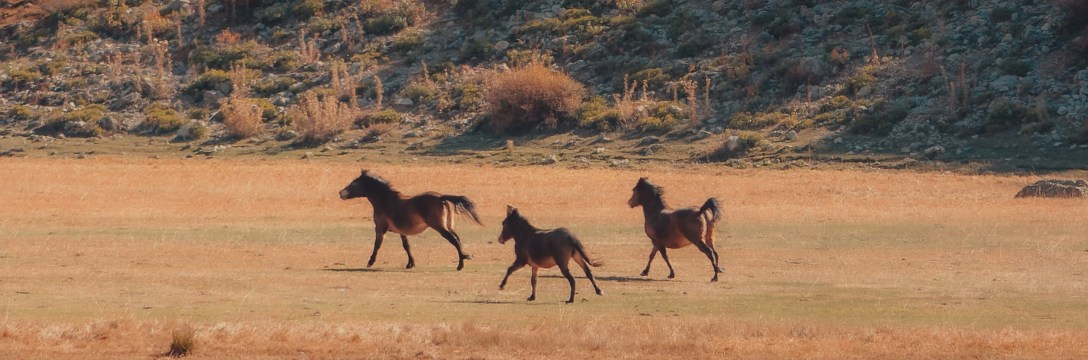
We’ve made our stories into something that we drive around with a whip, instead of something that takes us on a wild horseback tour across lands we’ve never imagined.
Don’t get me wrong – sometimes picking up the reins and forcing the plot to behave is exactly the thing to do, or forcing yourself to behave and stop ignoring the manuscript you swore you’d get back to six months ago. But spending the majority of your time manhandling the story into happening is going to do you in sooner than later. Is this why there’s so many jokes and memes about writing being painful or unpleasant?
Have we forgotten the art of going on a journey on its own terms, and simply seeing what happens?
This may sound a little abstract, so let me illustrate. I’m speaking as if the stories come to us with a will of their own and, in a sense, I believe they do. They emerge from that mysterious fog of creation, beginning as mere twinkles in the mist. It’s the author’s job to catch and cultivate them. That’s why the beginning of anything is often more exciting than the rest: the light is new and bright, and the current flows with all the vigor of a stream in spring. Unforeseen movement emerges from the frozen banks of winter.
The problems begin when, eventually, the stream abruptly runs out. We can’t access that exhilarating feeling of words coursing through our fingers anymore, and we panic.
”I have writer’s block.”
”My creativity hit the wall.”
”The motivation is just gone.”
”I simply can’t figure these chapters out.”
Thus we shelve the project, only for it to serve as a painful reminder of our own inadequacy, glaring at us from the bottom of a drawer.
But what if we’re mistaken, and it’s not only up to us? We thought that summer would go on forever, but forgot that winter exists. When it came, and the streams froze over, we reeled. What now? I have deadlines, and schedules and milestones to hit! We take an ice pick and hack at the stream, forcing the water to trickle through.
But we have the wrong idea all along. We forget that spring will come again, and many stories need their hibernation. Not all, though: it’s great if you churned out a wonderful novel during NaNoWriMo and had no issues, or if your natural style is a perfectly outlined, quick dash from A to B and a solid book or two in a year.
But I’m not talking about that. I’m talking about the unpredictable nature of the subconscious, the engine that regulates how fast or beautiful our words flow. Call it what you will: the collective subconsious, the aether, divine revelation, a muse…
The rate and way inspiration and insight comes to us can be steered to a great degree, but never entirely controlled. There is always a slight element of the mysterious to the process of creation, a hum of awareness not from this realm – unless you really are the type of cut-and-dry writer who precisely plans each element into being and stacks them together like a blueprint. Kudos to you, you’re winning at the game already.
But for the highly intuitive ones who struggle with these sudden disappearances of their story, take heart. It’s natural, and even healthy. My own history of writing is a prime example of this.
Learning the Rhythms
As a beginning writer, I tried to do the whole plan-the-whole-plot and outline-everything route. I quickly realised it wasn’t for me, since my best passages were mostly the ones that emerged from the woodwork completely unplanned. Guided by an existent woodwork, of course: I had a basic idea of where the plot was going and who was in it, and the major points that needed to happen and whatever bits of outline turned out to be useful. But the more I tried to do the right thing and strictly follow the outline, the less inspired the story became. By the time I’d hit a certain chapter, the natural flow would simply change things, and generally for the better.
So I began to learn to ride the wild horse.
The problem was, the wild horse can sometimes buck you off and vanish into the mountains for days, weeks, months. Trying to force the same level of writing with the docile stand-in ponies just didn’t cut it. This used to frustrate me to no end, until I learned it was a pattern: the horse would suddenly return, out of the blue, and I’d get back on.
The story wanted to continue. The mind had quietly assimilated and worked through everything it needed, and it was ready for action again.
I don’t think we give enough thought to the factors influencing our ability to tell a particular story to its fullest and at the right time. We struggle because we feel like we should be able to finish a 300-page book in six months or some other arbitrary time, but don’t realise that we’re not meant to finish it yet. It hasn’t yet come to us in all its full glory, and our minds haven’t yet expanded and developed enough to house it in the way it deserves.
In writing my first futuristic sci-fi novel, I really struggled at times. First of all, it was a huge challenge to incorporate all this tech and science that didn’t necessarily exist yet, and I had no formal training in these fields. Secondly, the flow of the narration just…dropped off a cliff after almost a year of writing.
A year spent in bursts of a few weeks’ inspiration at a time, at that. I just didn’t know what it was. I liked the story, I wasn’t sick of it, I wanted to tell it, and tell it now. But it eluded me so hardcore that I could do nothing but wait for the horse to return and the stream ice to thaw.
It did – almost two years later. Sure, I wrote quite a bit inbetween, but it was the occasional scene and sequence, not the kind of full-on immersion that every writer wants when they’re crafting a novel.
Late one year, I felt that tingle again, out of nowhere. That desire to give it a go again, even if my confidence wasn’t high due to the perceived failure of all previous attempts.
Five months later, I’d completed the first full draft. Another four months in, and it was ready for beta readers. What I left out earlier was the fact of a side story: a more lighthearted mystery set in the same world as my first YA trilogy. While the sci-fi was on the rocks, the mystery was blooming. When the sci-fi awoke, the mystery went to bed. It was an odd binary star system orbiting the center of my writing gravity, but it worked.
I had begun both stories as ideas on paper at almost the same time, late 2019. It was only fitting that both were finished by the end of 2024. A five-year timeline for two books is not doable for most commercial fiction authors, sure. But the point is to illustrate the beauty of learning to ride the wild horse. The more you learn to work with your instincts, not against them or in spite of them, the more productive you’ll naturally become. It took me this long because both stories were experiments, new ventures of their kind, and it was this process that made my writing skills rise miles above what they’d been in 2020 when I finished my first trilogy.
Besides – some authors only produce a book every five, seven, ten years. There is no formula.
The more you allow the natural pace in the beginning, the better it will reward you later. Having finished these two, another three have already taken their place without a singular conscious effort from me.
One story hit me in the face on an ordinary train ride home from work, as a short scene on note paper.
The other suddenly sprawled from my imagination as an almost complete frame, begging to be filled.
And another, a vast space opera series with a ton of intricate worldbuilding and detailed story documents to its name since 2017, only saw its first line of action in mid-2025.
What can I say? Mysterious are the ways of the writerly subconscious. I kept wondering when that series would finally spark up with a ”Hey! Write me now!” until it happened and it was like the floodgates opened after years of the water having gathered in a dam. Meanwhile, the other story horses went to rest on pasture, but I know they will return, eventually, when their time comes.
There’s no point in suppressing a story screaming to be told, even if you don’t know why, and equally no point to forcing something that doesn’t flow from your innermost being. No matter how long the winters, the springs after long absences are breathtaking. The more you learn to flow with the rhythms, the shorter those winters need to be, and the richer your worlds of writing will be for it.
Happy riding.
x The Foxglove Scribe

 The Foxglove Scribe